
Value-based Science Communication for a Sustainable Future
On October 6, 2026, the German Advisory Council on the Environment and the Federal Environment Agency hosted an international conference titled “Living within Planetary Boundaries: Facing Facts | Rethinking Strategies | Building Bridges.” More than 200 people from academia, politics, and civil society discussed how the world can find a path toward greater sufficiency in light of the critical overshoot of planetary boundaries—that is, the limits of the Earth that we need to survive. In this context, sufficiency refers to living prosperously with less: less resource consumption, less pressure for growth, but a higher quality of life. But how can this idea be communicated without letting value judgments stifle the discourse?
The conference program was a mix of science, art, and active exchange. Artistic interventions opened up new perspectives on the theme of “enough” and encouraged participation. One session consisted of parallel panels focusing on political programs, resource management, the economy, and science communication. It was during this session that the MoWiKo guide was presented: a tool for researchers and activists to communicate complex topics such as planetary boundaries in a way that is both understandable and conducive to discourse.
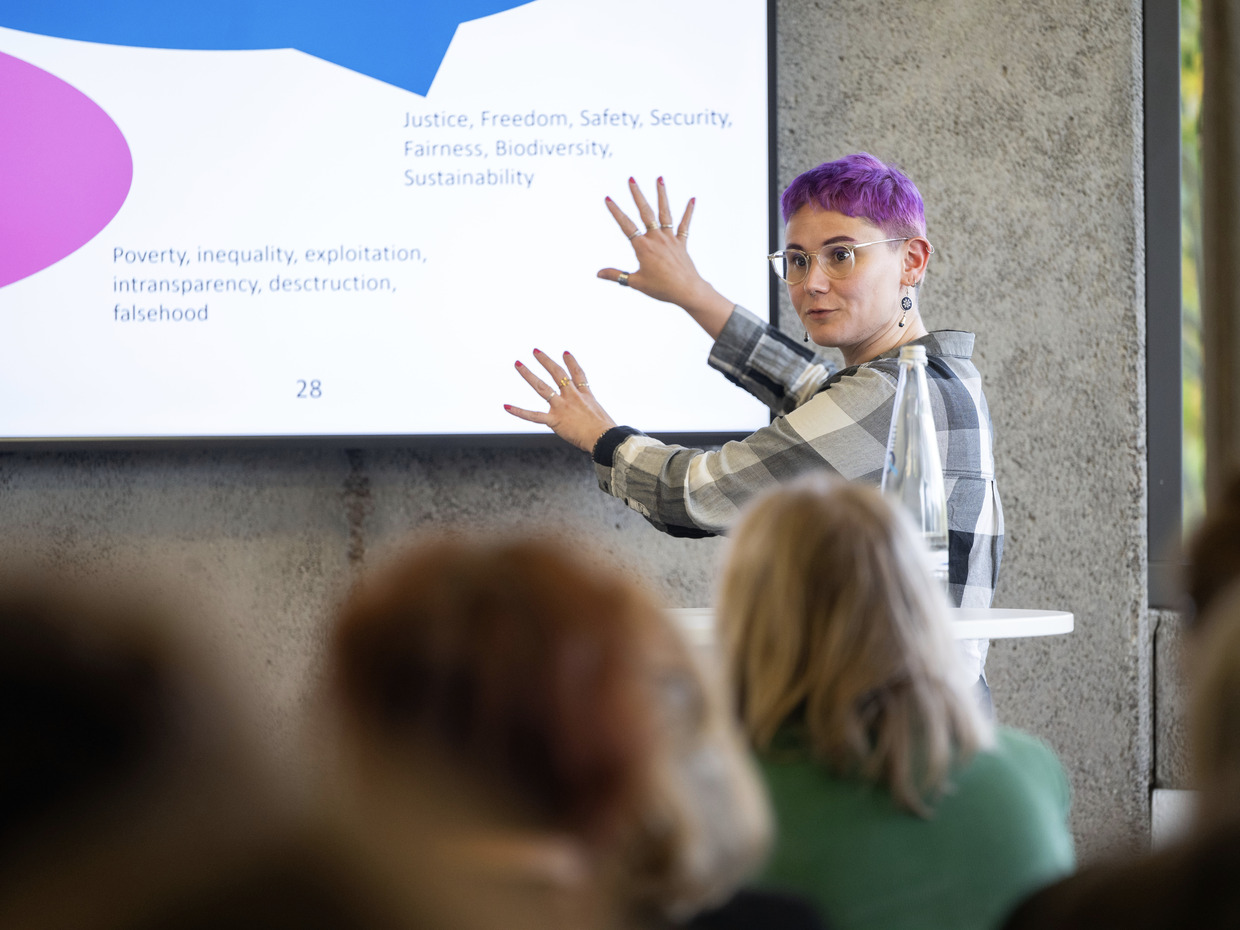
The workshop “How (not) to moralize” highlighted where communication falls short today. Following an opening presentation by the founder and CEO of the NGO Talking Hope—which engages in outreach-based climate communication—participants analyzed texts in small groups that moralize in ways that stifle discourse. Their target was to rewrite these texts using the new guidelines: moving away from accusations and toward proposed solutions. Reflecting on the rewriting process was very insightful for both the participants and us as the project team: The guide is helpful, but communication that fosters discourse while remaining value-oriented takes practice!